Play Yukon Cells Solitaire Online for Free (No Signup Required)
Yukon Cells bolts two free cells onto the wide-open Yukon deal, giving you a spot to park a stubborn card before hauling a whole stack across the tableau.
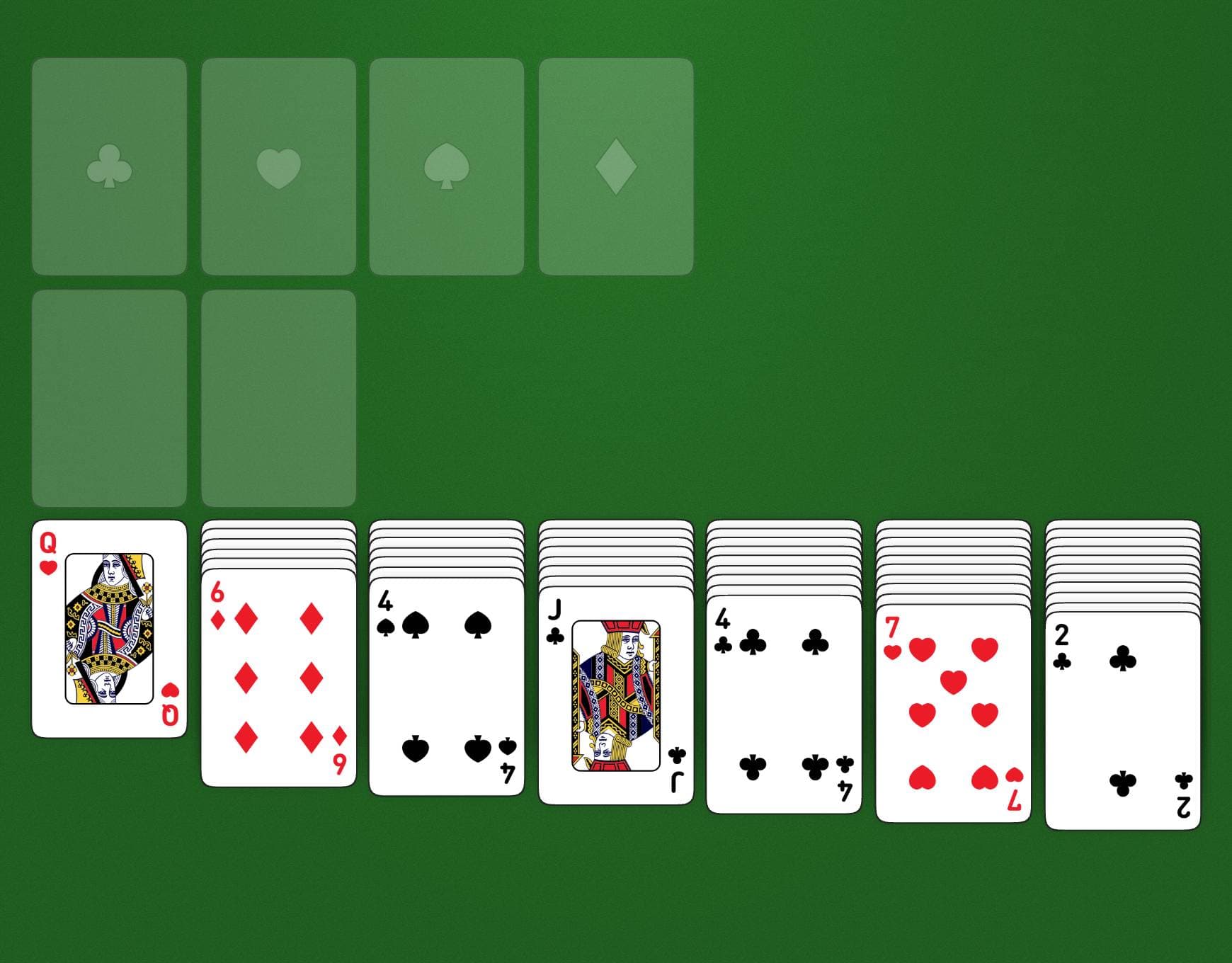
Yukon Cells Solitaire hands the classic Yukon deal a pair of free cells, borrowing the temporary parking spots that made FreeCell famous. Yukon itself is a bold cousin of Klondike: most of the deck is dealt face-up from the start, and you may lift any group of cards, ordered or not, onto another pile. The two cells give you room to shuffle a stubborn card out of the way, which softens Yukon's toughest tangles.
Every deal is played with a single deck and no stock, so nothing gets reshuffled once you begin. A few cards on the taller piles start face-down, but with a little planning most games can be solved, and the cells reward players who think a move or two ahead rather than grab the first legal play.
If you like the freedom of Yukon but want a gentler challenge, the extra cells are a welcome cushion. If you like a squeeze, resist using them until you truly need the relief.
If you enjoy Yukon Cells, try Yukon Solitaire, the game it's built on, or FreeCell, the game that lent it those two cells.
If you run into anything odd or have an idea that would make the game better, please contact me.
Have fun!
How to play Yukon Cells Solitaire
Layout:
4 foundation piles: Build up by suit from Ace to King.
2 free cells: Each cell holds one card at a time and can be used as temporary storage for any single card.
7 tableau piles: Build down in alternating colors. Pile one starts with a single face-up card; piles two through seven each begin with a run of face-down cards, one more per pile as you move right, then five more cards dealt face-up on top, for column totals of 1, 6, 7, 8, 9, 10, and 11.
Foundation:
There are four foundation piles, one for each suit.
A card can be added to a foundation pile only if it's one rank higher and the same suit as the pile's current top card. The foundations begin with an Ace and build up to the King.
The top card of each foundation can be moved back into play if another pile will accept it. Completing all four foundations wins the game.
Free cells:
There are two free cells, each empty at the start. Any single card may be moved into an empty cell, and the card resting in a cell can later be played onto the tableau or the foundations. Cells give you a place to tuck away a blocking card while you free the ones beneath it.
Tableau:
Seven tableau piles hold 1, 6, 7, 8, 9, 10, and 11 cards. Pile one starts with a single face-up card. Piles two through seven each begin with a run of face-down cards, one more per pile as you move right, then five more cards dealt face-up on top.
A card can be added to a tableau pile only if it's one rank lower and the opposite color of the pile's current top card, so the only card that fits on a black 8 is a red 7.
Unlike most games, you may pick up any face-up card along with every card sitting on top of it, regardless of whether they form an ordered sequence, and move the whole group at once onto another pile.
Empty tableau spaces may be filled with a King, either alone or leading a group of cards.


