Play Superior Canfield Solitaire Online for Free (No Signup Required)
See your whole thirteen-card reserve face up from the first deal, skip forced refills into empty columns, and enjoy roughly one win in three.
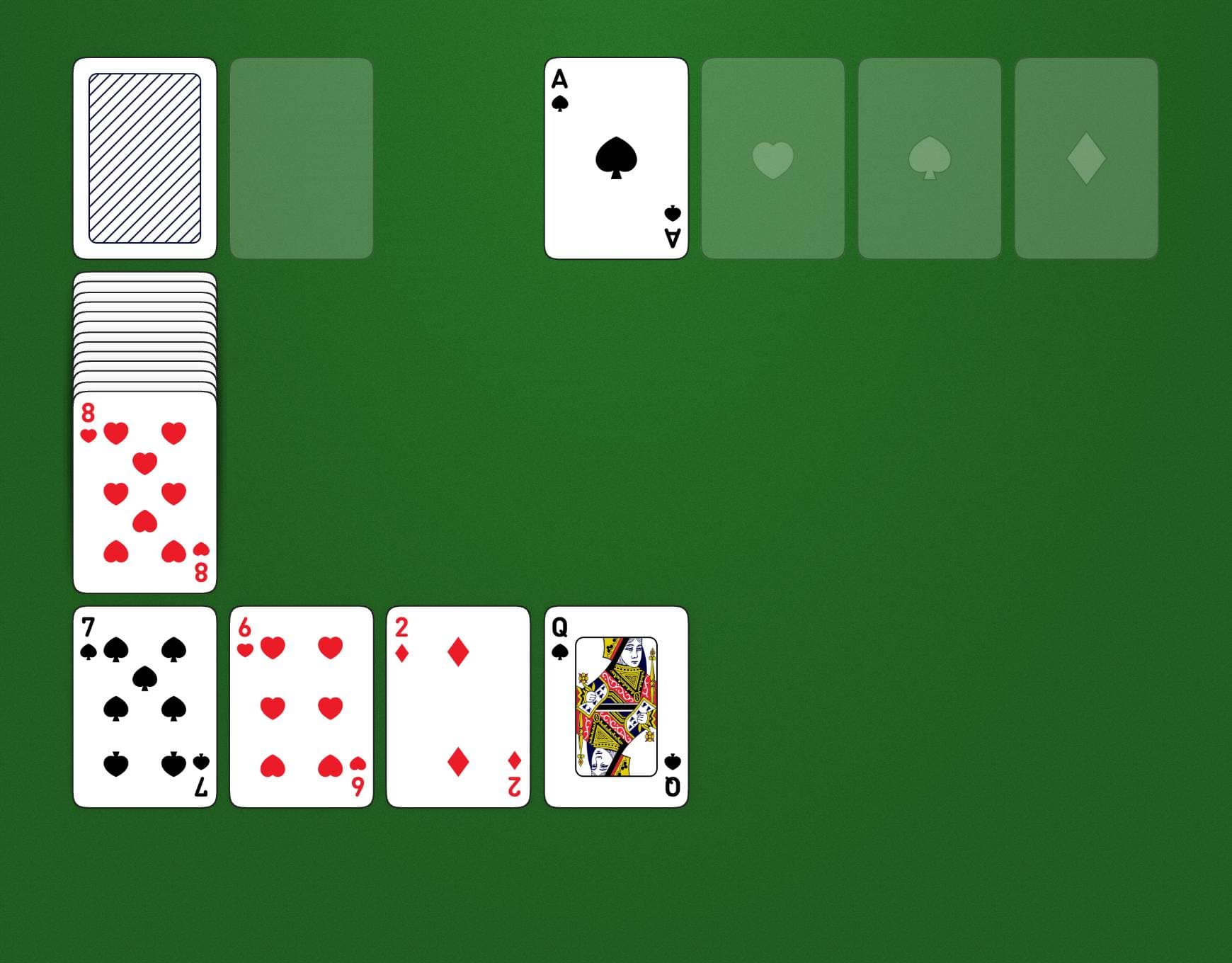
Canfield takes its name from Richard A. Canfield, the Gilded Age casino owner whose Saratoga Springs gambling house sold players a deck for fifty dollars and paid five back for every card landed on the foundations. In Britain the game is called Demon, and this gentler treatment appears in older collections as Superior Demon — a rare variant whose name promises an upgrade for the player rather than the house.
Two mercies set it apart from its parent. First, the thirteen-card reserve is dealt entirely face up, so you can plan the whole excavation from the opening move. Second, an emptied tableau column is not refilled from the reserve: the space stays open until you choose to fill it, with any card.
Everything else is pure Canfield. A single card dealt to the first foundation fixes the base rank for the whole game, foundations climb thirteen cards in suit wrapping from King to Ace, the tableau builds down in alternating colors, and the stock turns three cards at a time with unlimited passes. The game is moderately difficult, and those freedoms let careful players win about one deal in three — noticeably more than standard Canfield. Single deck, and what punishes you here is chiefly your own reading of the tableau, though luck in the reserve deal still plays a hand.
Fans of Canfield Solitaire will recognize plenty here, and Storehouse Solitaire shares the same family tree.
The classic Solitaire is where all this Canfield tinkering ultimately started.
If you run into anything odd or have an idea that would make the game better, please contact me.
Enjoy playing!
How to play Superior Canfield Solitaire
Layout:
4 foundation piles: Build up in suit from the rank of the first card dealt, wrapping from King to Ace as needed until each pile has 13 cards.
4 tableau piles: Build down in alternating colors. Empty spaces are not refilled automatically and may be filled with any card. At the start of the game, each pile is dealt one card.
Reserve: All 13 cards are dealt face-up. The top card is available for play on the tableau or foundations.
Stock: Click to deal three cards at a time to the waste. The stock may be run through without limit.
Waste: Top card is playable.
Foundation:
There are four foundation piles.
One foundation pile is given a random starting card, and the other three begin with cards of that same rank.
A card can be added to a foundation pile only if it's one rank higher and the same suit as the pile's current top card, wrapping from King to Ace. There can be no more than 13 cards in a pile.
The top card of each foundation can be moved back into play if another pile will accept it.
Reserve:
There is one reserve pile, which originally contains thirteen cards. Unlike standard Canfield, every reserve card is dealt face-up. No cards may be moved into the reserve.
The top reserve card can be played to the tableau or the foundations.
Tableau:
Four tableau piles, each dealt one card in a row. Every card is dealt face-up.
A card can be added to a tableau pile only if it's one rank lower and the opposite color of the pile's current top card. Ranking is circular, so a King fits on an Ace.
Uncovered cards are free to be played onto the foundation or any other tableau pile, and a face-up run in descending alternating colors may be moved as a group.
Empty spaces are not refilled automatically; they may be filled at any time with any available card or run, or held open for later.
Stock and waste:
There is one waste pile and the remaining thirty-four cards comprise the stock.
When you click on the stock, three cards are dealt to the waste. When the stock runs out, the waste is turned over to form a new stock — there is no limit on redeals.
The top card of the waste can be played to the tableau or foundation.


