Play Wood Solitaire Online for Free (No Signup Required)
Wood deals two decks onto a random base rank: race eight foundations wrapping King to Ace while a locked reserve refuses to touch your tableau.
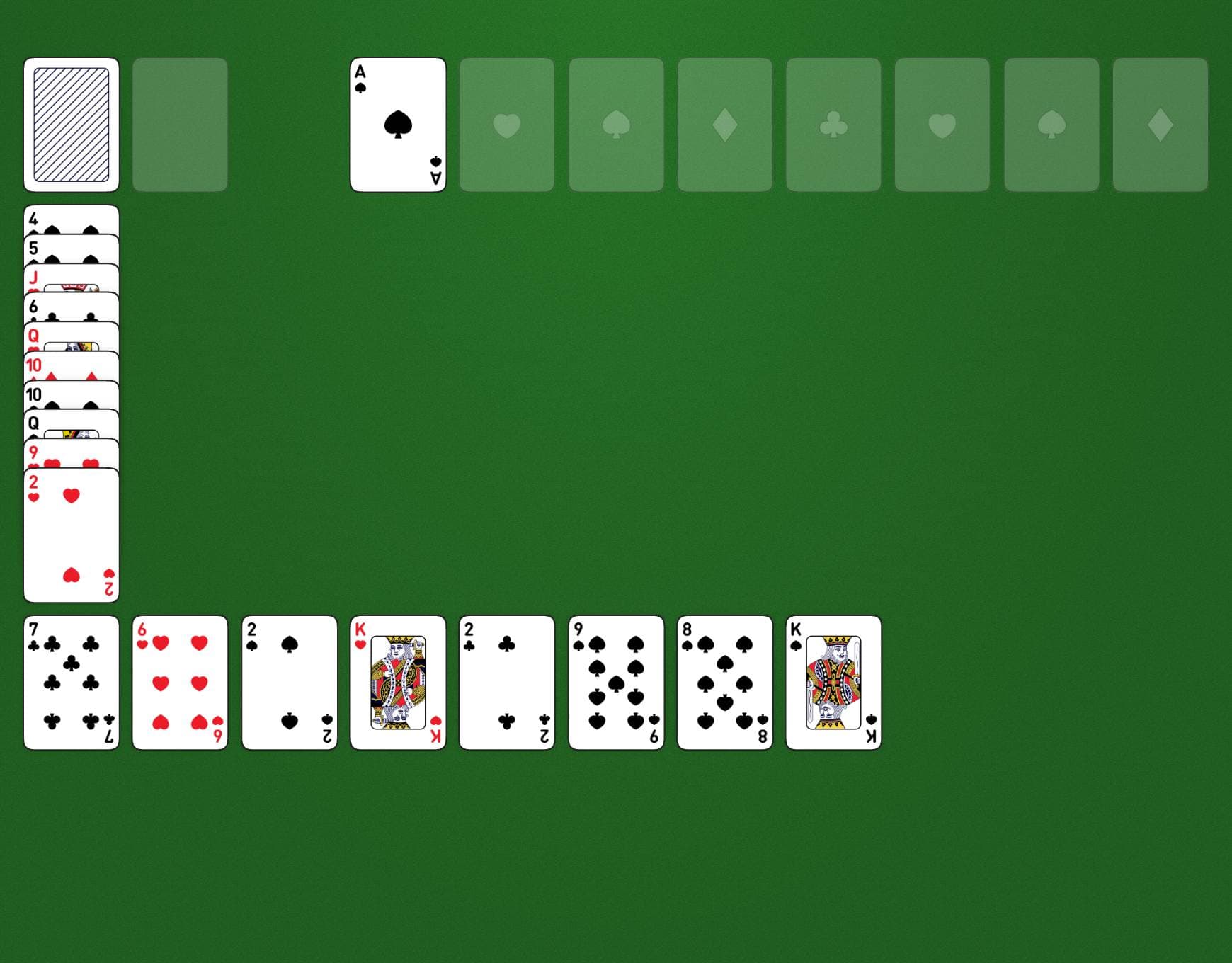
Wood Solitaire is a two-deck game in the Canfield family, and like Canfield it hands you a random starting rank rather than the tidy Ace you might expect. The eight foundations are each seeded with a single card, and every one of them builds upward in alternating colors from that shared base rank, wrapping from King around to Ace so the sequences always close cleanly.
Below the foundations sit eight tableau columns, each dealt one card, where you build downward in alternating colors. Off to the side a reserve of ten cards waits, but it is a one-way street: reserve cards may only be played to the foundations, never onto the tableau. A stock and waste round out the layout, with a single pass through the stock, so any card you pass on is gone for the rest of the game.
That reserve-to-foundation restriction is what gives Wood its bite. Since the reserve cannot help you build the tableau, you have to time its release around the alternating-color climb, and empty columns can only be refilled from the waste. With two full decks and one deal, keeping the foundations moving in step is the whole art of the game.
If you enjoy Wood, try Canfield Solitaire or Blondes and Brunettes Solitaire, two classic solitaire card games.
If you run into anything odd or have an idea that would make the game better, please contact me.
Have fun!
How to play Wood Solitaire
Layout:
8 foundation piles: Each is dealt one card at the start and builds up in alternating colors from a shared random base rank, wrapping King to Ace until every card is home.
8 tableau piles: Each is dealt one card and builds down in alternating colors. Only one card is moved at a time. Empty columns can only be filled from the waste.
Reserve: Ten cards are dealt here. The top card is available, but it may only be played to a foundation.
Stock: Click to turn cards to the waste one at a time. There is a single pass with no redeals.
Waste: The top card is playable to the tableau or a foundation.
Foundation:
There are eight foundation piles, each seeded with one card at the deal.
The rank of that first card is chosen at random and shared by every foundation. A card can be added only if it's one rank higher and the opposite color of the pile's current top card, wrapping from King back to Ace until the pile is full. Because building is automatic, cards that fit are carried up for you.
The top card of each foundation can be moved back into play if another pile will accept it.
Tableau:
Eight tableau piles, each dealt a single face-up card.
A card can be added to a tableau pile only if it's one rank lower and the opposite color of the pile's current top card, so the only card that fits on a black eight is a red seven. Only one card may be moved at a time; sequences are not carried as a group, and reserve cards may never be placed on the tableau.
Empty tableau spaces are filled solely from the waste. If no waste card is available to fill a gap, that column stays open until one is.
Reserve:
There is one reserve pile, dealt ten cards at the start. Every card is face-up, and the pile is not refilled once it runs down.
The top card of the reserve may be played, but only to a foundation. It can never go onto a tableau column, so the reserve is purely fuel for the foundations.
Stock and waste:
The remaining cards make up the stock, with one waste pile beside it. When you click the stock, one card is turned to the waste. There is only one pass through the stock, and no redeals. The top card of the waste can be played to the tableau or a foundation.


