Play Red and Black Solitaire Online for Free (No Signup Required)
Every build, foundation or tableau, must alternate red and black. One simple rule, two full decks, and most deals are yours to win.
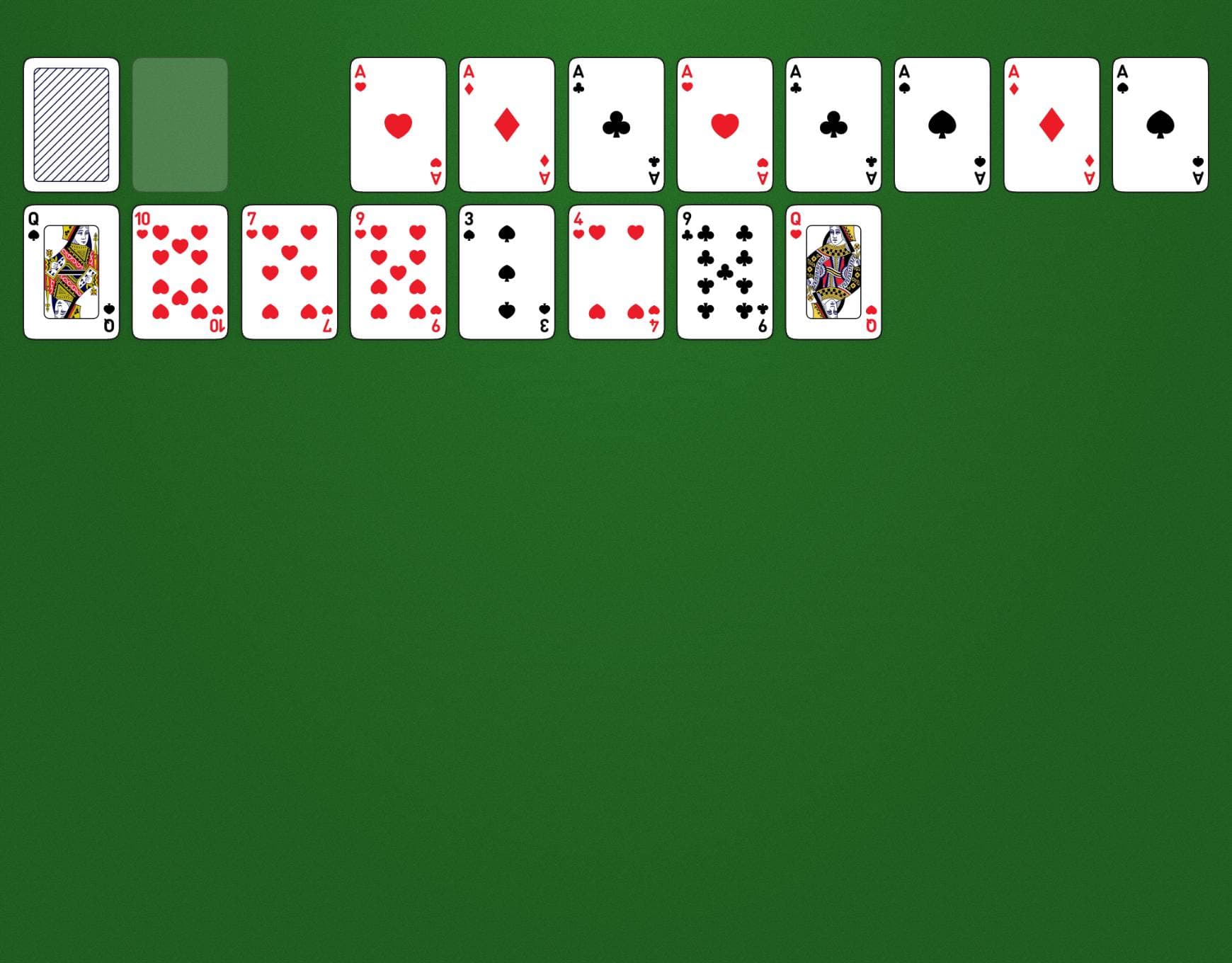
Red and Black Solitaire is a two-deck patience named after its single governing idea: every build in the game, on the foundations and the tableau alike, must alternate red and black cards. The eight Aces are placed on the foundations before play begins, so the goal is in sight from the very first move — climb from Ace to King in alternating colors, eight times over.
The game has appeared in patience collections since the early twentieth century and owes its staying power to how easy it is to learn. With every tableau card dealt face-up and only one building rule to remember, the game is simple, and with careful play the large majority of deals can be won. Across two decks, that one rule is really all you need to carry you through — skill more than chance.
The one real constraint is the stock: it may be dealt through only once, with no redeals. Choosing when to draw a fresh card and when to empty the waste pile first is where most deals are won or lost.
If alternating colors is your thing, Alternations Solitaire and Alternate Solitaire share the same core idea and are worth a look.
If you run into anything odd or have an idea that would make the game better, please contact me.
Enjoy playing!
How to play Red and Black Solitaire
Layout:
8 foundation piles: Build up in alternating colors from Ace to King. The eight Aces are dealt here at the start of the game.
8 tableau piles: Build down in alternating colors. One face-up card is dealt to each pile at the start of the game.
Stock: Click to flip over cards one at a time to the waste. There are no redeals.
Waste: Top card is playable.
Foundation:
There are eight foundation piles. Each begins with an Ace, dealt automatically at the start of the game.
A card can be added to a foundation pile only if it's one rank higher and the opposite color of the pile's current top card, so the only cards that fit on an 8 of spades are the 9 of hearts and the 9 of diamonds. A pile is complete when it reaches its King, holding 13 cards.
The top card of each foundation can be moved back into play if another pile will accept it.
Tableau:
Eight tableau piles of one card each. Every card is dealt face-up.
A card from the waste or another tableau pile can be added to a tableau pile only if it's one rank lower and the opposite color of the pile's current top card, so the only cards that fit on an 8 of spades are the 7 of hearts and the 7 of diamonds.
Cards on the tableau that are not covered by another card are free to be played onto the foundation or any other tableau pile. A properly formed sequence of alternating colors may be moved from one pile to another as a unit.
Any card or sequence may be placed in an empty tableau spot.
Stock and waste:
There is one waste pile and the remaining cards comprise the stock.
When you click on the stock, one card from the stock is dealt to the waste. There's only one pass through the stock, with no redeals.
The top card of the waste can be played to the tableau or foundation.


