Play Gilbert Solitaire Online for Free (No Signup Required)
Build four foundations up from the Ace and four down from the King at once, and guard your empty columns fiercely: only a Seven can fill them.
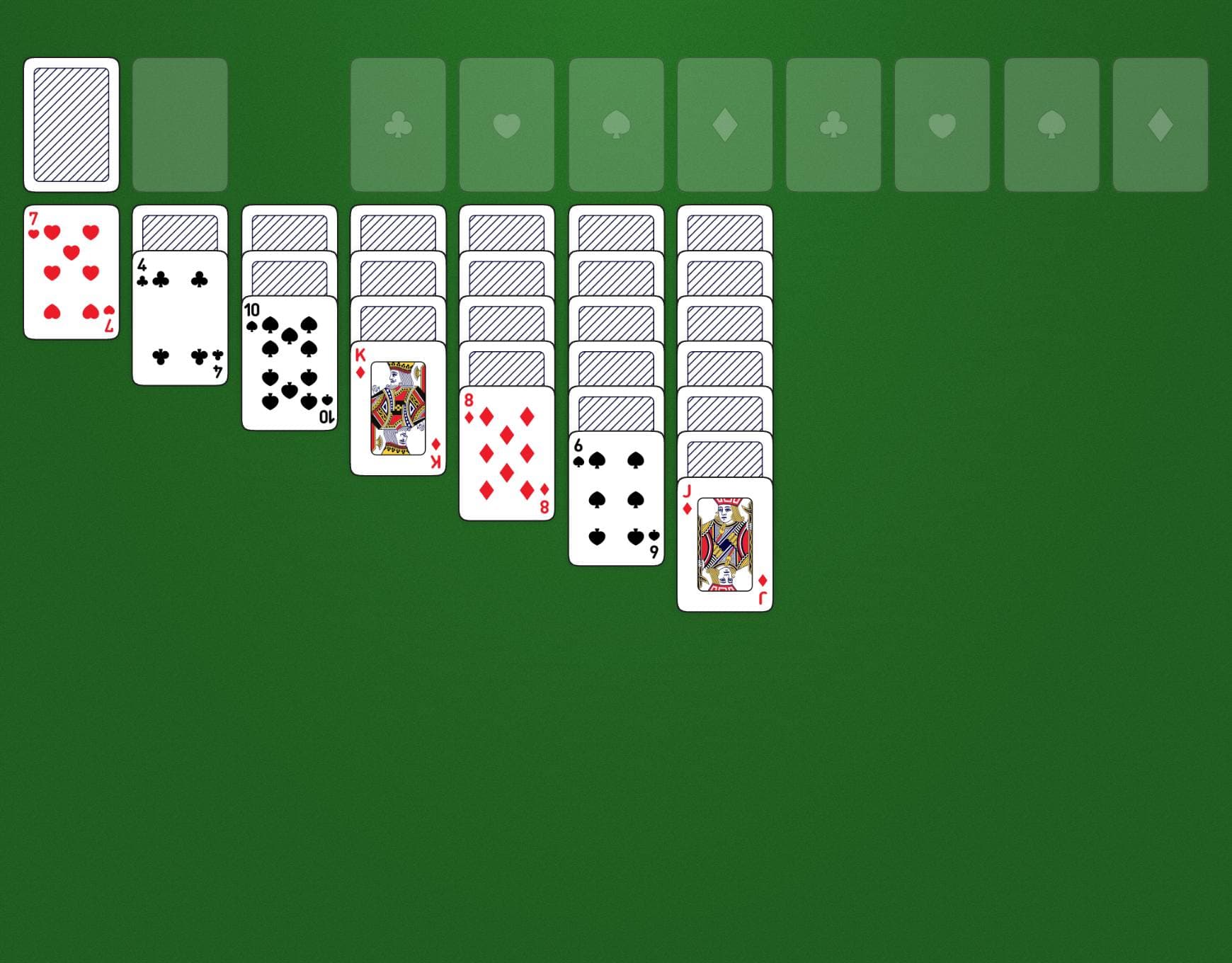
Gilbert Solitaire looks like ordinary Klondike until you notice the foundations line up in two directions. Four of them build upward in suit from the Ace, and four build downward in suit from the King, so every deal is a double climb toward two goals rather than one. Splitting the deck between an ascending and a descending set changes which cards you value and when.
The tableau is pure Klondike: seven columns dealt one through seven, only the bottom card of each face up, built and moved down in alternating colors. The twist waits in the gaps. When a column empties, it will not take just any card — only a Seven may be dropped into an open column. That single restriction turns empty spaces from a free lane into a resource you have to earn.
Played with one deck and unlimited redeals through a three-card stock, Gilbert rewards players who read the board before flipping and who keep both foundation directions moving together. Luck of the shuffle matters, but the two-way build makes skill the deciding factor.
Fancy another two-way build? Bisley Solitaire has one, and the original Solitaire is always there too.
If you run into anything odd or have an idea that would make the game better, please contact me.
Enjoy playing!
How to play Gilbert Solitaire
Layout:
8 foundation piles: Four build up in suit from the Ace; four build down in suit from the King. Each pile finishes with thirteen cards.
7 tableau piles: Dealt one to seven cards, only the top card of each face up. Build down in alternating color, and move runs down in alternating color. Empty piles may only be filled with a Seven.
Stock: Click to deal three cards at a time to the waste. Redeals are unlimited.
Waste: The top card is playable.
Foundation:
There are two foundation sets of four piles each.
One set climbs upward in suit from the Aces; the other descends in suit from the Kings. A card can be added only when it continues the pile's suit and direction, so the up-piles take the next higher card and the down-piles take the next lower one.
The top card of each foundation can be moved back into play if another pile will accept it.
Tableau:
Seven tableau piles, dealt one card in the first pile up to seven in the last. Only the top card of each pile begins face up; uncovering a face-down card turns it up.
A card can be added to a tableau pile only if it's one rank lower and the opposite color of the pile's current top card, so the only card that fits on an 8 of spades is a 7 of hearts. Ordered runs may be moved together.
Cards on the tableau that are not covered may be played onto a foundation or another tableau pile.
An empty tableau column may be filled only with a Seven.
Only ordered sequences move as a unit; otherwise one card moves at a time.
Stock and waste:
The undealt cards form the stock, and turned cards gather on the waste.
When you click the stock, three cards are dealt to the waste. Redeals are unlimited, so the pack may be cycled as often as you like.
The top card of the waste can be played to the tableau or the foundation.


