Play Diavolo Solitaire Online for Free (No Signup Required)
Juggle two decks between Klondike foundations and Spider-style 13-card runs, where nearly every card poses a devilish either-or. Challenging, with moderate odds of winning.
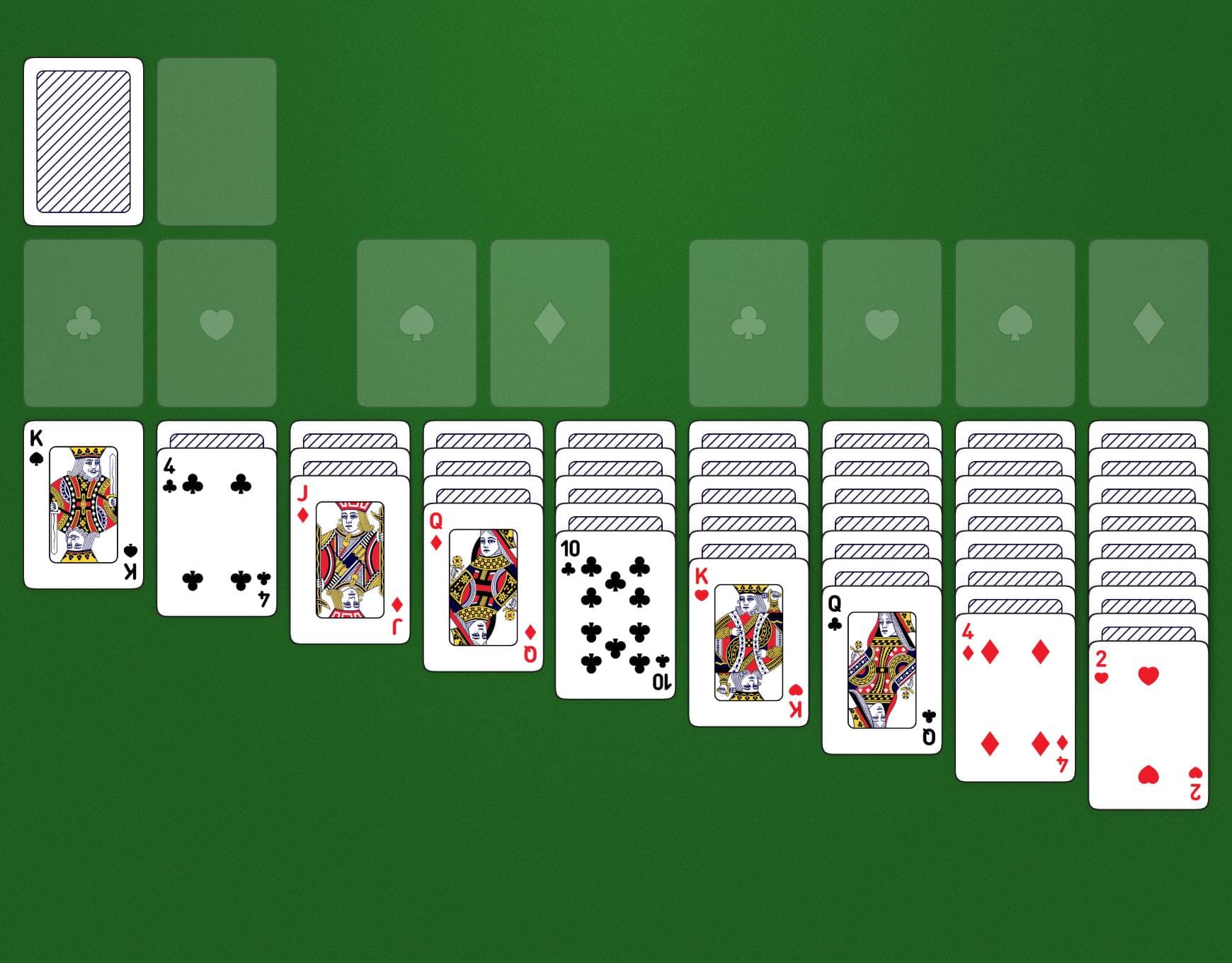
Diavolo Solitaire is Italian for "devil", and the game earns the name by making you serve two masters at once. It opens like an oversized nine-pile game of Klondike, but only half the pack is allowed to climb the four color foundations from ace to king. The other half must be woven into four complete 13-card sequences, king down to ace in alternating colors, which move to their own foundations only when finished — exactly as in Spider.
Almost every move poses a devilish question: should this card advance a foundation now, or stay below where a growing red-black run still needs it? The stock offers some mercy, dealing one card at a time to the waste with two redeals allowed. With two full decks in play and every card fighting for one of two homes, the game plays challenging, though a moderate share of hands still come home; how you sort the two masters matters more than luck does.
It plays a lot like Rouge et Noir Solitaire and Double Klondike Solitaire, if you want more of the same two-deck territory.
For the game this whole family grew out of, original Solitaire is still worth opening.
If you run into anything odd or have an idea that would make the game better, please contact me.
Enjoy playing!
How to play Diavolo Solitaire
Layout:
4 color foundation piles: Build up in the same color from Ace to King, in two pairs; each pair must start with one red ace and one black ace.
4 sequence foundation piles: Each accepts only a complete 13-card sequence, King down to Ace in alternating colors, moved whole from the tableau.
9 tableau piles: Alternate color build down. Dealt Klondike-style with 1 to 9 cards per pile, only the top card face up. Empty spaces may only be filled with Kings.
Stock: Click to flip over cards one at a time to the waste. There are two redeals.
Waste: The top card is playable.
Foundation:
There are eight foundation piles of two kinds.
The four color foundations sit in two pairs, and each pair must begin with an ace of each color. A card can be added only if it's one rank higher and the same color as the pile's current top card, so a red pile can be continued with either red suit. These piles run from Ace up to King, and their top cards can be moved back to the tableau if needed.
The four sequence foundations start empty and accept nothing but a finished 13-card run, King down to Ace in alternating colors, built in the tableau and moved across in one piece. Once placed, these cards can never be taken back. To win, complete all eight piles.
Tableau:
Nine tableau piles cascade downward in a Klondike deal of one to nine cards each; only the top card of every pile starts face-up, and buried cards flip as they are uncovered.
A card can be added to a tableau pile only if it's one rank lower and the opposite color of the pile's current top card, so the only cards that fit on a black 8 are the red 7's.
Face-up cards in a proper alternating-color sequence may be moved together as a unit.
Empty tableau spots may only be filled with a King or a sequence headed by a King, from any pile.
Stock and waste:
There is one waste pile and the remaining 59 cards comprise the stock.
When you click on the stock, one card from the stock is dealt to the waste. When the stock runs out, it may be turned over and dealt again — up to three passes in all.
The top card of the waste can be played to the tableau or the color foundations.


