Play Waning Moon Solitaire Online for Free (No Signup Required)
A Forty Thieves cousin, Waning Moon spreads two decks over thirteen four-card columns with only one pass through the stock. Difficult, two decks, about a 10% win rate.
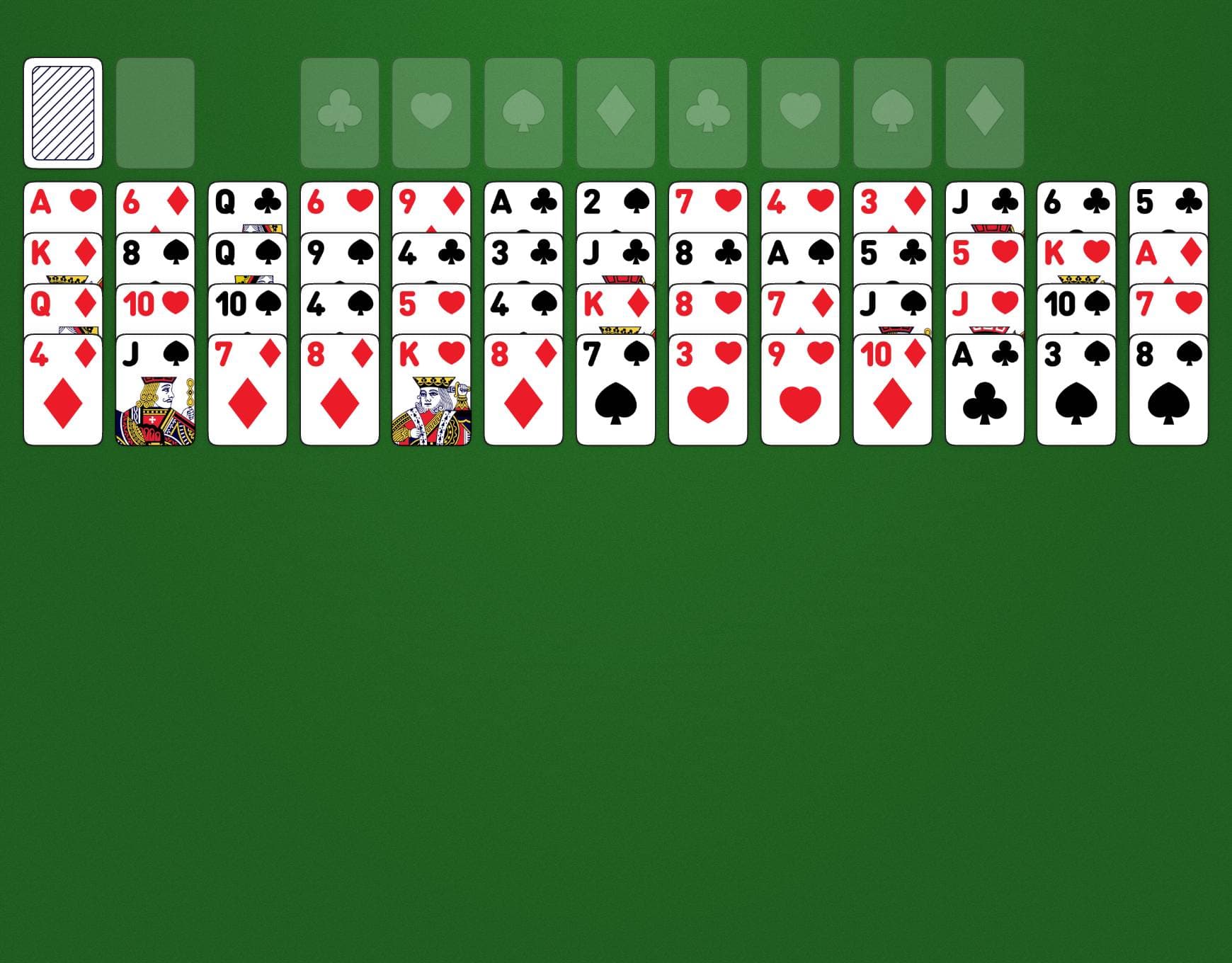
A member of the Forty Thieves family, Waning Moon Solitaire spreads two full decks across thirteen tableau columns of four cards each, leaving the other half of the deck in the stock. Foundations build up in suit, the tableau builds down in suit, and you only get a single pass through the stock. That single pass through the stock is exactly why the game is rated difficult, with about a 10% win rate across two decks. Read the columns right and skill will carry you further than luck ever could.
The game takes its name from the night sky: the long row of thirteen piles thins out card by card as the deal winds down, much like the moon shrinking to a sliver. It belongs to the same nineteenth-century lineage as Forty Thieves Solitaire, the two-deck classic that legend ties to Napoleon's exile on St Helena. By dealing the same 104 cards into three extra columns, Waning Moon keeps every pile a little shallower, so more of the deck is within reach from the very first move.
That extra elbow room is worth using carefully. Only one card may be moved at a time, and the single pass through the stock means every waste card you skip is gone for good. Empty a column early and guard it — a free space is the closest thing to a second chance this game offers.
Eclipse Solitaire and Thirty Nine Steps Solitaire take the same idea in different directions.
If you run into anything odd or have an idea that would make the game better, please contact me.
Enjoy playing!
How to play Waning Moon Solitaire
Layout:
8 foundation piles: Build up from Ace to King in the same suit.
13 tableau piles: Build down in the same suit. Only the top card of each pile may be moved. Any card can fill an empty space. At the start of the game, each pile is dealt four cards face-up.
Stock: Click to flip over cards one at a time to the waste. There are no redeals.
Waste: The top card is playable.
Foundation:
There are eight foundation piles.
Any ace may be moved to any vacant foundation pile.
A card can be added to a foundation pile only if it's one rank higher and the same suit as the pile's current top card, so the only card that fits on a 5 of diamonds is a 6 of diamonds. There can be no more than 13 cards in a pile.
The top card of each foundation can be moved back into play if another pile will accept it.
Tableau:
Thirteen tableau piles of four cards each, all dealt face-up.
A card can be added to a tableau pile only if it's one rank lower and the same suit as the pile's current top card, so the only card that fits on an 8 of spades is a 7 of spades.
Cards on the tableau that are not covered by another card are free to be played onto the foundation or any other tableau pile.
Any card can fill an empty slot in the tableau.
Only one card may be moved at a time; sequences are not permitted.
Stock and waste:
There is one waste pile, and the remaining fifty-two cards comprise the stock.
When you click on the stock, one card from the stock is dealt to the waste. There can only be one pass through the stock.
The top card of the waste can be played to the tableau or foundation.


