Play Sir Tommy Solitaire Online for Free (No Signup Required)
Turn cards from the stock onto four reserve piles, but choose carefully: once placed, a card can only leave for the foundations. Odds of winning: 30%.
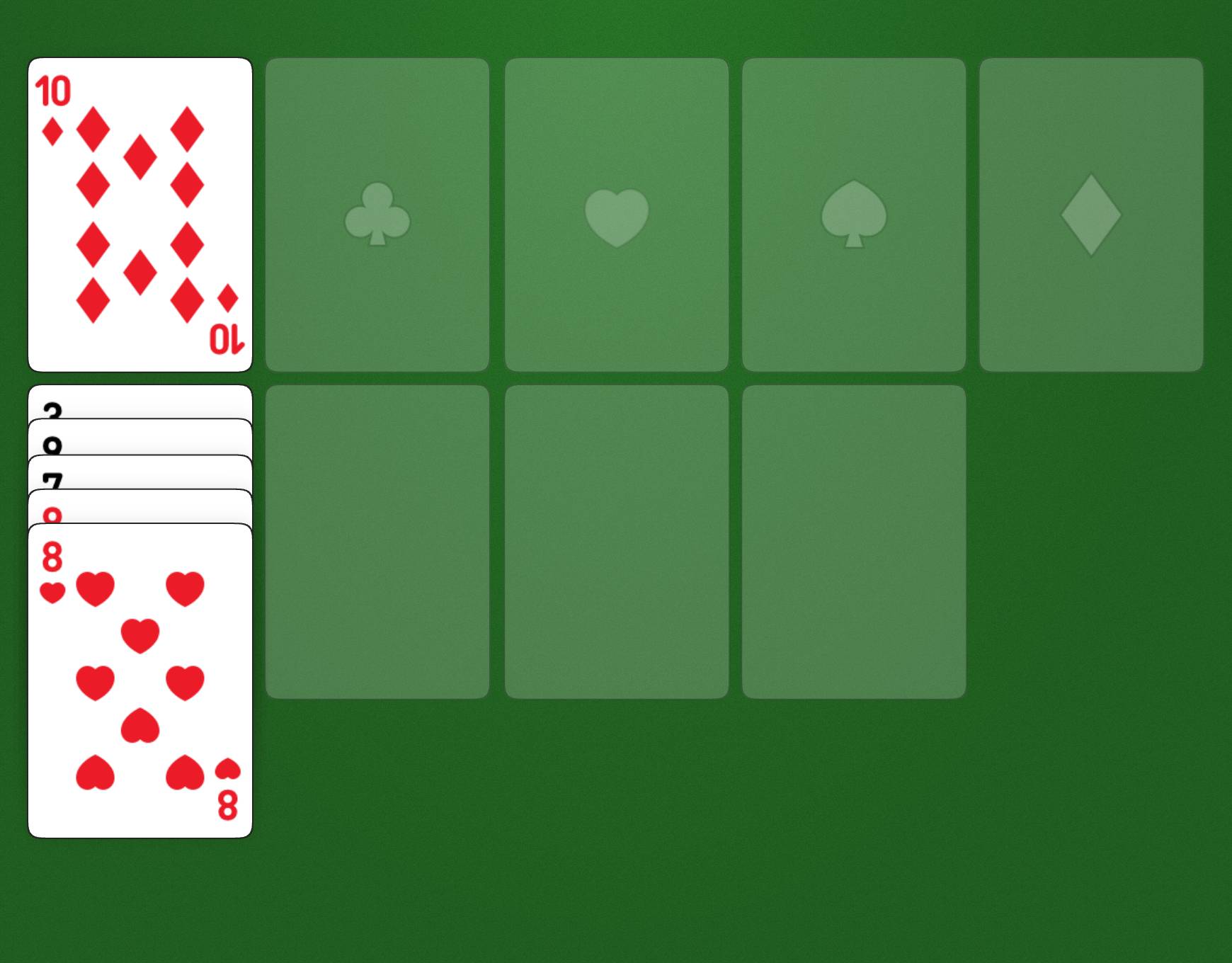
Sir Tommy Solitaire is often called the grandfather of all solitaire games. Card historians usually list it — under names such as Old Patience and Try Again — among the very first patiences ever recorded, going back to the early nineteenth century, and many later games read like elaborations of its one simple idea. Played with a single deck, it's a hard game to win, roughly 30% of the time, and since skill drives that number more than luck does, thinking ahead before every placement pays off.
That idea could hardly be plainer: turn up the cards from the stock one at a time and drop each one onto any of four open reserve piles, playing Aces — and anything else that fits — to the foundations along the way. The foundations build up from Ace to King regardless of suit, so every rank is welcome somewhere sooner or later.
The catch is that a card placed on a reserve pile can never move to another reserve pile; its only way out is the foundations. A Queen dropped on top of a Two traps that Two for most of the game, so every single placement is a little exercise in planning. That is why such a tiny game has stayed in print for two centuries.
For more of that same careful, one-pass planning, go try Calculation Solitaire, Alternate Solitaire, and Auld Lang Syne Solitaire next.
If you run into anything odd or have an idea that would make the game better, please contact me.
Enjoy playing!
How to play Sir Tommy Solitaire
Layout:
4 foundation piles: Build up regardless of suit from Ace to King. Piles start empty; play Aces here as they appear.
4 reserve piles: Start empty. Cards from the stock may be placed on any reserve pile; only the top card of each pile may leave, and only to the foundations.
Stock: The top card is face-up. Place it on a reserve pile of your choice or play it straight to a foundation. There is only one pass through the stock.
Foundation:
There are four foundation piles.
Any Ace may be moved to an empty foundation pile. A card can be added to a foundation pile only if it's one rank higher than the pile's current top card, regardless of suit, so the only cards that fit on an 8 of spades are the four 9s. There can be no more than 13 cards in a pile.
The top card of each foundation can be moved back into play if another pile will accept it.
Reserve:
There are four reserve piles, all empty at the start of the game. Every card is placed face-up.
Cards may only arrive from the stock: take the top card of the stock and lay it on whichever reserve pile you like, on top of whatever is already there. There are no building restrictions — any card may be placed on any pile.
Once a card is on a reserve pile, it may never move to another reserve pile. The top card of each pile can only be played to the foundations, so think twice before burying a low card under a high one.
Stock:
The stock holds the whole deck at the start of the game.
The top card of the stock is always face-up and must be placed on one of the four reserve piles or played directly to a foundation — there is no waste pile.
There is only one pass through the stock; once every card has been placed, the game is decided on the reserve piles.


