Play Minerva Solitaire Online for Free (No Signup Required)
Spend an eleven-card face-up reserve wisely, dig through four-deep tableau columns, and lean on two stock passes to out-think this single-deck challenge.
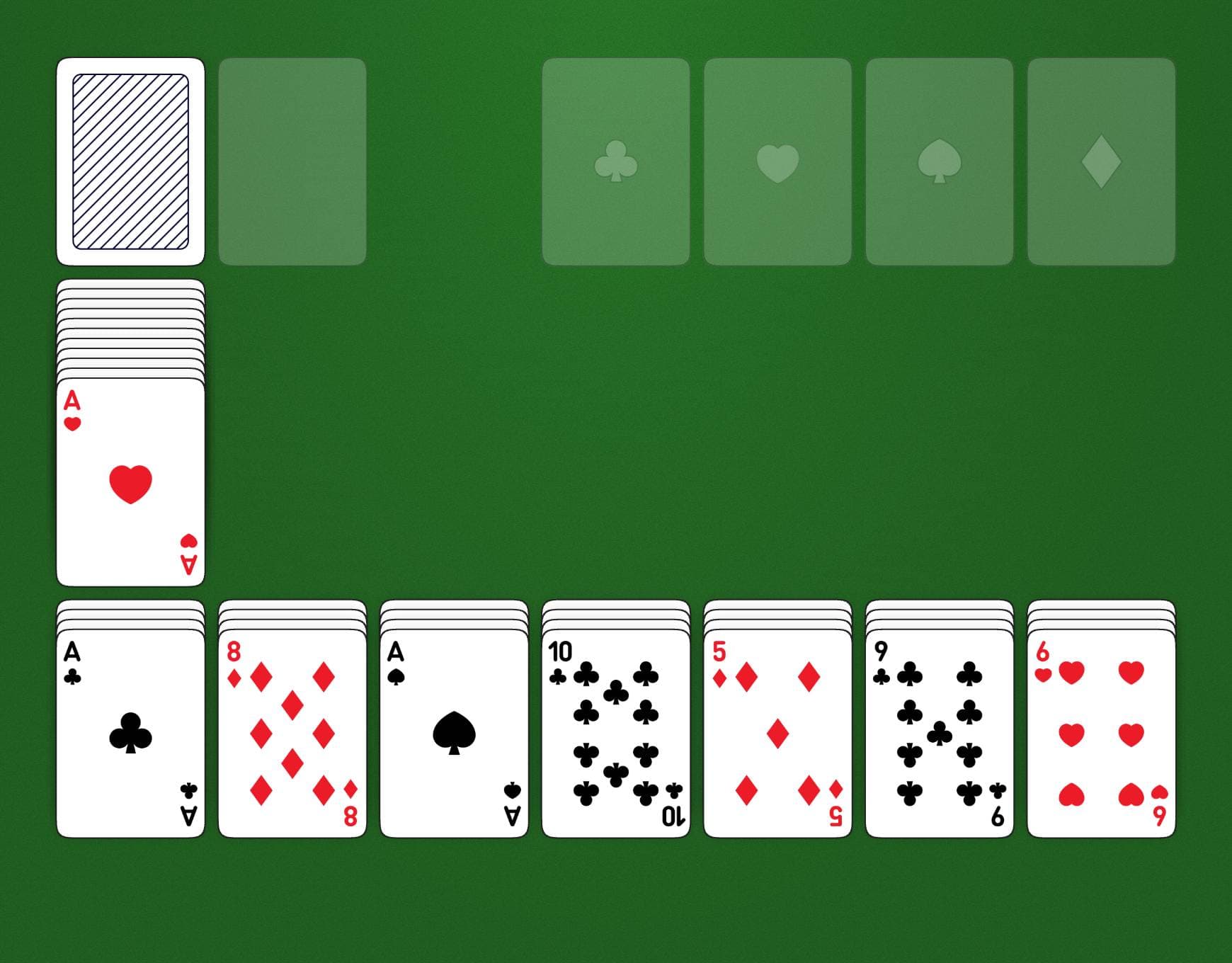
Minerva Solitaire takes the well-known Athena deal and hands you an extra advantage: a wide, face-up reserve to draw from. Seven tableau columns are dealt four cards each, with the first and third rows face down, so half your board starts hidden and unfolds as you clear the cards above. Alongside the columns sits a reserve of eleven cards, all face-up and waiting to be spent onto the tableau or the foundations.
The single deck and the deep reserve make Minerva a thinking player's game rather than a pure gamble. Because you get a second pass through the stock and only Kings may claim an emptied column, planning which cards to bury and which to hold back matters more than in most one-deck games. Handle the reserve early and the hidden rows tend to fall into place; hoard it and you may run the stock dry with cards still trapped.
Card historians credit the Athena family to the modern designers who revived Canfield-style reserves for solitaire software, and Minerva keeps that lineage while leaning a little friendlier. Skilled play, not luck, decides most deals.
Athena Solitaire and Double Minerva Solitaire share the same reserve-and-tableau setup as this one.
From here, the natural next stop is original Solitaire, the game this whole family builds on.
If you run into anything odd or have an idea that would make the game better, please contact me.
Enjoy playing!
How to play Minerva Solitaire
Layout:
4 foundation piles: Build up by suit from Ace to King.
7 tableau piles: Alternate color build down, and ordered runs move as a unit. Four cards are dealt to each pile, with the first and third rows face down. Empty columns may be filled only with a King or a King-headed run.
Reserve: Eleven cards are dealt here face-up at the start. Only the top card is available, and it may be played to the tableau or the foundations.
Stock: Click to flip cards one at a time to the waste. You get two passes through the stock in total.
Waste: The top card is playable.
Foundation:
There are four foundation piles, one for each suit.
A foundation pile is started with an Ace. From there, a card can be added only if it's one rank higher and the same suit as the pile's current top card, so the only card that fits on the 5 of clubs is the 6 of clubs. Each pile is complete at the King.
The top card of each foundation can be moved back into play if another pile will accept it.
Reserve:
There is one reserve of eleven cards, all dealt face-up. No card may be moved into the reserve. Only the top card is in play, and it can go to any tableau pile it fits or to a foundation. Spending the reserve steadily is the key to opening the hidden rows in the tableau.
Tableau:
Seven columns sit side by side, each with four cards. The first and third rows are dealt face down and turn over as the cards above them are removed.
A card can be added to a tableau pile only if it's one rank lower and the opposite color of the pile's current top card, so the cards that fit on the 8 of spades are a 7 of hearts or a 7 of diamonds. A run already in proper descending, alternating-color order may be moved together as a unit.
A King, or a run headed by a King, is the only thing that may fill an empty column.
Stock and waste:
The remaining cards form the stock, dealt one at a time to a single waste pile. Only the top waste card is playable, to the tableau or a foundation. You may run through the stock twice before it is exhausted.


