Play Lafayette Solitaire Online for Free (No Signup Required)
Chase two finish lines at once: four foundations climb from the Ace while four more count down from the King. Every card in your hand has two homes to choose from.
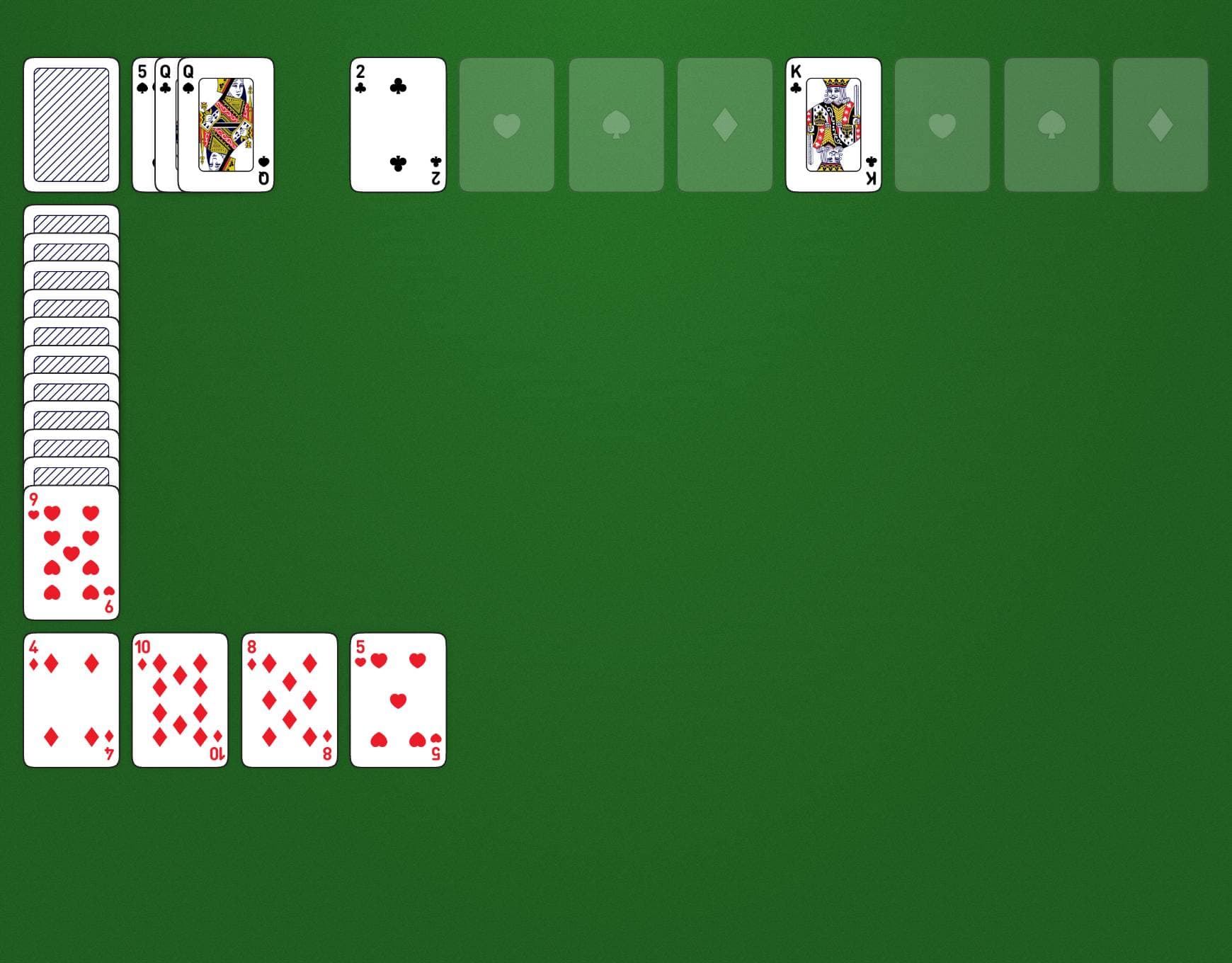
Lafayette Solitaire takes the Canfield idea and doubles the finish line. Instead of one race up from the Aces, you run two: four foundations climb up in suit from the Ace, and four more descend in suit from the King. Every card in the deck therefore has two possible homes, and choosing which one to feed is half the puzzle.
The deal keeps a Canfield flavor. A thirteen-card reserve sits face down with only its top card showing, and just four short tableau columns start the board. Empty columns refill straight from the reserve, so the pile you rely on shrinks whether you want it to or not. Once the reserve runs dry, only a Seven may be placed into a vacant column, which makes those gaps far harder to reopen late in the game.
Because the stock deals three at a time with unlimited redeals, patient players can cycle the pack many times hunting for the card that breaks a jam. Success leans on planning the two-way foundations before you commit.
From here, Canfield Solitaire shows where this idea began, and the classic Solitaire is the natural next stop after that.
If you run into anything odd or have an idea that would make the game better, please contact me.
Enjoy playing!
How to play Lafayette Solitaire
Layout:
8 foundation piles: Four build up in suit from the Ace; four build down in suit from the King. Both sets aim for thirteen cards each.
4 tableau piles: Build down in alternating color, and move ordered runs down in alternating color. Each pile starts with a single face-up card. Empty columns are refilled automatically from the reserve.
Reserve: Thirteen cards are dealt here, face down except for the exposed top card, which is available for play.
Stock: Click to deal three cards at a time to the waste. Redeals are unlimited.
Waste: The top card is playable.
Foundation:
There are two foundation sets of four piles each.
One set is built upward in suit beginning with the Aces. The other is built downward in suit beginning with the Kings. A card may join a pile only when it continues that pile's suit and direction, so the up-piles accept the next higher card and the down-piles accept the next lower one.
The top card of each foundation can be moved back into play if another pile will accept it.
Reserve:
There is one reserve of thirteen cards, dealt face down with only the top card turned up. As the top card leaves, the next one is revealed. The reserve automatically feeds any empty tableau column, and its top card may also go to a foundation or a legal tableau spot.
Tableau:
Four tableau piles, each dealt a single face-up card.
A card can be added to a tableau pile only if it's one rank lower and the opposite color of the pile's current top card, so the only card that fits on an 8 of spades is a 7 of hearts. Ordered runs may be moved together.
Cards on the tableau that are not covered may be played onto a foundation or another tableau pile.
While the reserve holds cards, empty columns are filled from it automatically. Once the reserve is empty, only a Seven may be placed into a vacant column.
Stock and waste:
The undealt cards form the stock, and turned cards gather on the waste.
When you click the stock, three cards are dealt to the waste. There is no limit on redeals, so the pack may be cycled repeatedly.
The top card of the waste can be played to the tableau or the foundation.


