Play Cleopatra Solitaire Online for Free (No Signup Required)
Deal two decks into a thirteen-pile pyramid, dig through 21 hidden cards, and get just one pass through the stock to free them all.
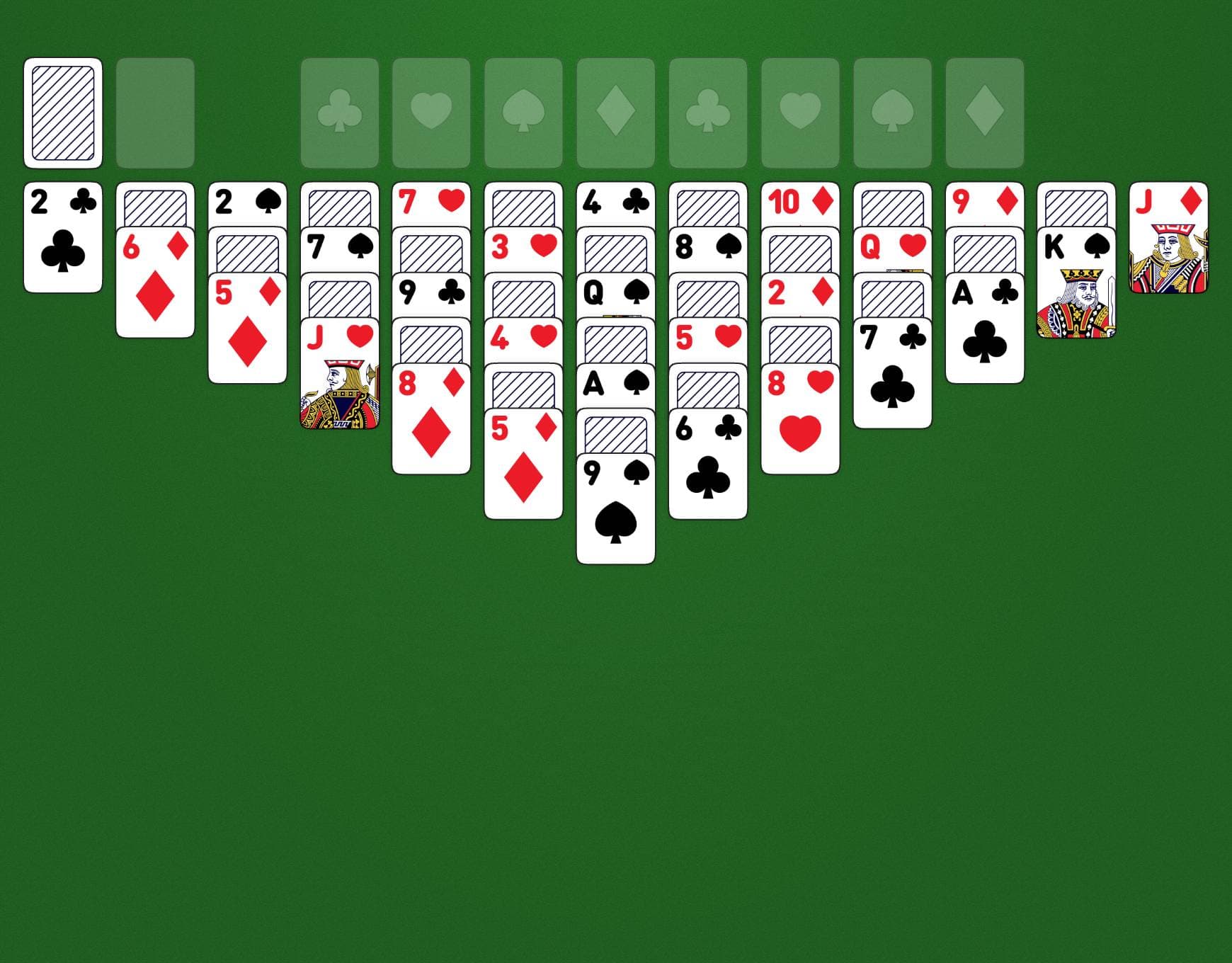
Cleopatra Solitaire is a two-deck game from the Forty Thieves family, invented by Thomas Warfield. Instead of the classic row of flat columns, the tableau is dealt as a pyramid: thirteen piles that grow from a single card up to seven in the middle, then shrink back down to one. Forty-nine cards are dealt to the table, alternating face down and face up within each pile, so twenty-one of them start hidden.
The building rules are strict. Tableau piles build down in the same suit, only one card may be moved at a time, and you get a single pass through the fifty-five-card stock. The one mercy is that any card may fill an empty pile — and the short piles at the pyramid's edges clear quickly, handing you spaces early on.
The game is difficult. You'll need skill and a bit of luck to win, with two full decks to work through.
Once you've had enough pyramids, Thieves of Egypt Solitaire and Forty Thieves Solitaire are the natural next games to try.
For a change of pace, the original Solitaire strips all of this back to basics.
If you run into anything odd or have an idea that would make the game better, please contact me.
Enjoy playing!
How to play Cleopatra Solitaire
Layout:
8 foundation piles: Build up from Ace to King in the same suit.
13 tableau piles: Build down in the same suit. Only the top card of each pile may be moved. Any card may fill an empty space. At the start of the game the piles are dealt in a pyramid — one card up to seven and back down to one — with cards alternating face down and face up.
Stock: Click to flip over 1 card at a time to the waste. There are no redeals.
Waste: Top card is available for play.
Foundation:
There are eight foundation piles.
A card can be added to a foundation pile only if it's one rank higher and the same suit as the pile's current top card, so the only card that fits on a 10 of hearts is a J of hearts. There can be no more than 13 cards in a pile. Cards that can legally go to a foundation are moved there automatically.
The top card of each foundation can be moved back into play if another pile will accept it.
Tableau:
Thirteen tableau piles dealt as a pyramid: one card in the first pile, rising to seven cards in the middle pile, and falling back to a single card in the last. Cards alternate face down and face up within each pile, and the top card of every pile is always face up. A face-down card is turned over as soon as it is uncovered.
A card can be added to a tableau pile only if it's one rank lower and the same suit as the pile's current top card, so the only card that fits on an 8 of hearts is a 7 of hearts.
Cards on the tableau that are not covered by another card are free to be played onto the foundation or any other tableau pile.
Any card may fill an empty spot in the tableau.
Only one card may be moved at a time; sequences are not permitted.
Stock and waste:
There is one waste pile and the remaining 55 cards comprise the stock.
When you click on the stock, one card from the stock is dealt to the waste. There can only be one trip through the stock.
The top card of the waste can be played to the tableau or foundation.


