Play Trevi Garden Solitaire Online for Free (No Signup Required)
Trevi Garden takes the old brick-wall Stonewall and adds two free cells and a fountain of always-playable cards. One deck, tough but fair.
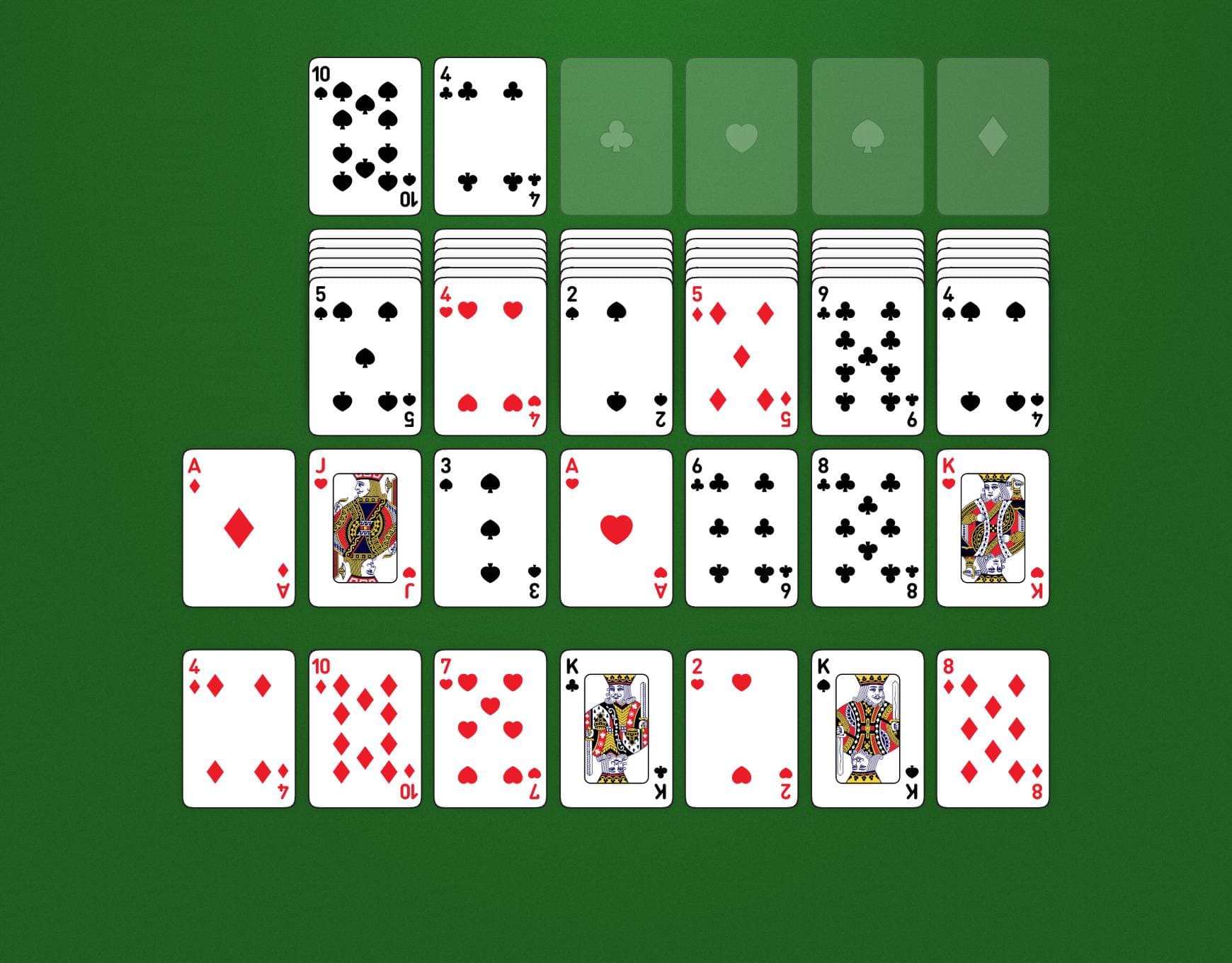
Trevi Garden Solitaire takes the old brick-wall patience Stonewall Solitaire and makes it kinder by opening two free cells beside the board. The tableau is still the familiar garden: six rows of six cards, with every other row dealt face down, so half the deal begins hidden like paving stones tipped over in the grass.
The cards left over after the garden and the cells are laid out form the fountain — a spread of face-up singles, each one playable at any moment but never replenished once spent. With the two cells to park a card and reclaim it at will, Trevi Garden gives you just enough breathing room to work the hidden rows loose without the wall becoming a genuine stone one.
The game is difficult but fair, and the two cells lift the win rate comfortably above bare Stonewall. It is played with a single deck, and because so much of the garden begins face down, your odds of victory depend heavily on reading the deal and spending the fountain wisely.
If you enjoy Trevi Garden, Flower Garden Solitaire is the other game behind it worth a look, since that's where this board's always-playable fountain comes from.
If you run into anything odd or have an idea that would make the game better, please contact me.
Enjoy playing!
How to play Trevi Garden Solitaire
Layout:
4 foundation piles: Build up in suit from Ace to King.
6 tableau piles: Build down in alternating colors. Six cards are dealt to each pile, with the first, third, and fifth cards face down. Any card may fill an empty space.
Reserve: 14 cards spread face-up as the fountain. Every fountain card is available for play at any time.
Cells: 2 free cells, each dealt one card at the start. A cell holds a single card and can be emptied and refilled freely.
There is no stock and no waste; the whole deck is on the table from the very first move.
Foundation:
There are four foundation piles, and they begin the game empty.
Each foundation needs its Ace before anything else can go there. After that, a card can be added only if it's one rank higher and the same suit as the pile's current top card, so the only card that fits on an 8 of spades is a 9 of spades. There can be no more than 13 cards in a pile.
The top card of each foundation can be moved back into play if another pile will accept it.
Tableau:
Six tableau piles of six cards each, spread out in a row. The first, third, and fifth card of every pile is dealt face down; a hidden card is turned over as soon as the cards covering it are cleared away.
A card can be added to a tableau pile only if it's one rank lower and the opposite color of the pile's current top card, so the only cards that fit on an 8 of spades are the 7 of hearts and 7 of diamonds.
Cards on the tableau that are not covered by another card are free to be played onto the foundation or any other tableau pile, and a face-up run in descending alternating colors may be moved as a group. Any card or run may fill an empty tableau spot.
Reserve:
There are fourteen fountain cards, dealt face-up. Unlike most reserves, every card is available at all times — not just the one on top.
A fountain card may be played to the foundations, built onto a tableau pile, or moved into an empty tableau spot. No card may ever be moved into the fountain, and an emptied slot stays empty for the rest of the game.
Cells:
There are two free cells. Each begins with one card, which may be played to a foundation, built onto the tableau, or set into an empty tableau spot.
A cell holds only one card at a time. Once you play the card out, the cell stands open and any single card — from the tableau, the fountain, or the other cell — may be moved into it for safekeeping.


