Play Aces and Kings Solitaire Online for Free (No Signup Required)
Two decks feed eight foundations, four climbing from ace and four dropping from king, with no building on the tableau. Just a 5% win rate rewards real skill.
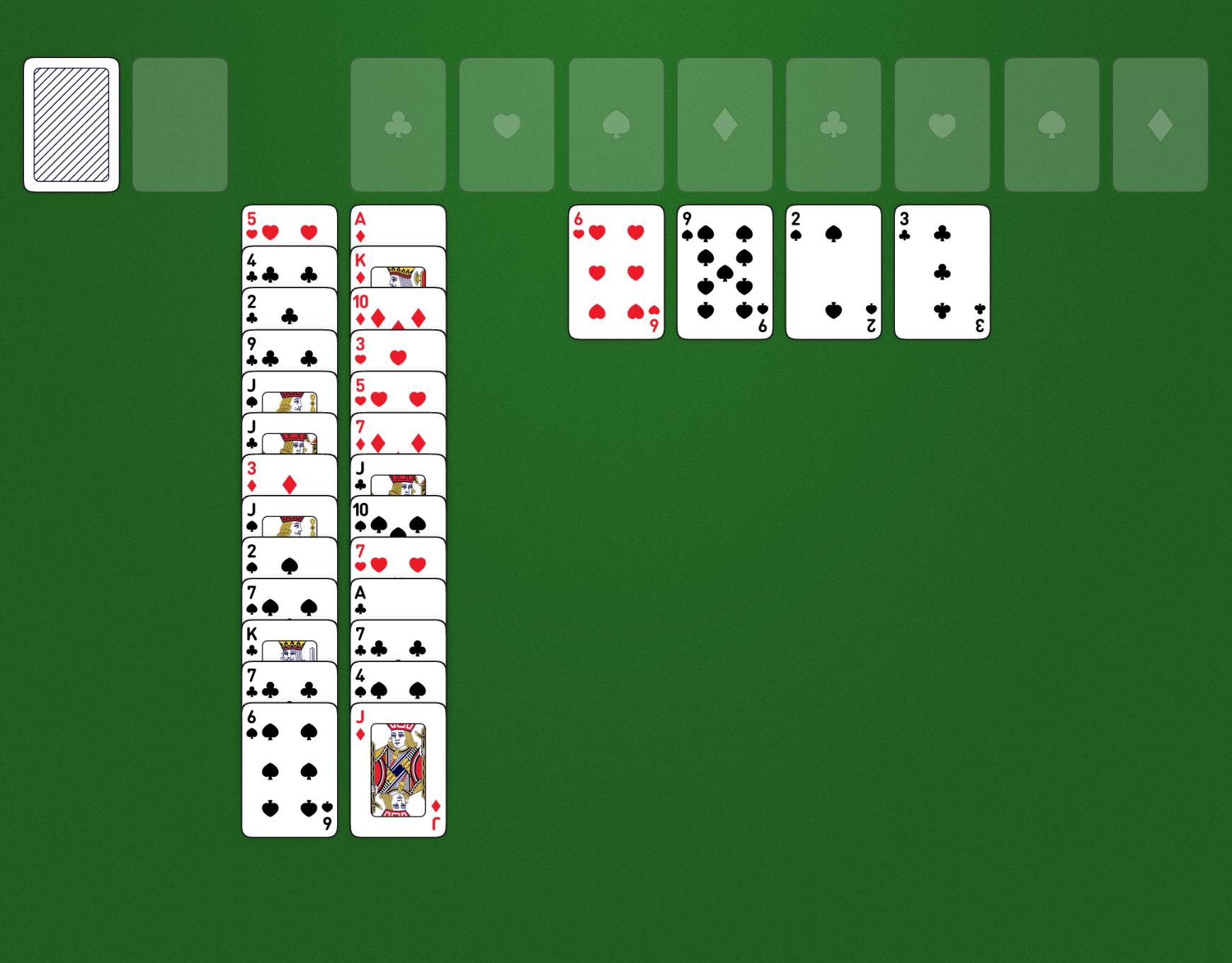
Build up on one foundation and down on the other, but never on the tableau. Suits don't matter here.
Thomas Warfield created Aces and Kings Solitaire by blending pieces of several classic games. It's a tough one, with only a 5% chance of winning. You play it with two decks, and your odds come down mostly to skill.
If you like this one, give Acey and Kingsley Solitaire, Deuces and Queens Solitaire, or Double Aces and Kings Solitaire a try — they're all built on the same two-foundation idea.
If you run into anything odd or have an idea that would make the game better, please contact me.
Enjoy!
How to play Aces and Kings Solitaire
Layout:
8 foundation piles: Build the first four piles up from Ace to King, and the last four down from King to Ace — suit doesn't matter for either.
4 tableau piles: One card per pile, and no sequences are ever built here. Any card can fill an empty pile. At the start of the game, each pile is dealt one card.
2 reserve piles: The top card can be played to the foundations or an empty tableau pile. At the start of the game, each reserve is given 13 cards.
Stock: Click to turn over 1 card at a time to the waste. There are no redeals.
Waste: Top card available for play on the foundations or tableau.
Foundation:
Foundation piles are classified into two types.
The Ace Foundation
The ace foundation has four piles. Any ace may be transferred to any vacant pile in the ace foundation. A card can be added to an ace foundation pile only if it's one rank higher than the pile's current top card and of any suit, so the only card that fits on a 5 is a 6. There can be no more than 13 cards in a pile.
The King Foundation
There are four piles in the king's foundation. Any king may be transferred to any vacant pile in the king's foundation. A card can be added to a king foundation pile only if it's one rank lower than the pile's current top card and of any suit, so the only card that fits on a 6 is a 5. There can be no more than 13 cards in a pile.
Cards may be removed from any foundation.
Reserve:
There are two reserves, each with thirteen cards at first. Every card is dealt face-up. There are no cards that can be moved into the reserves. Each reserve's top card can be played to any empty tableau pile or foundation.
Tableau:
There are four tableau piles of one card each. Every card is dealt face-up.
On the tableau, no construction is authorized.
The tableau cards can be played on the foundation or any empty tableau pile.
Empty tableau spots can be filled with any card.
Only one card may be moved at a time; sequences are not permitted.
Stock and waste:
There is one waste pile and the remaining cards comprise the stock.
When you click on the stock, one card from the stock is dealt to the waste. You get a single pass through the stock — there are no redeals.
The top waste card can be played to any empty tableau pile or foundation.


