Play Fred's Spider Solitaire Online for Free (No Signup Required)
Send single cards straight to the foundation the moment they're in order, no full run needed, across two forgiving decks. Simple difficulty, a 96% win rate.
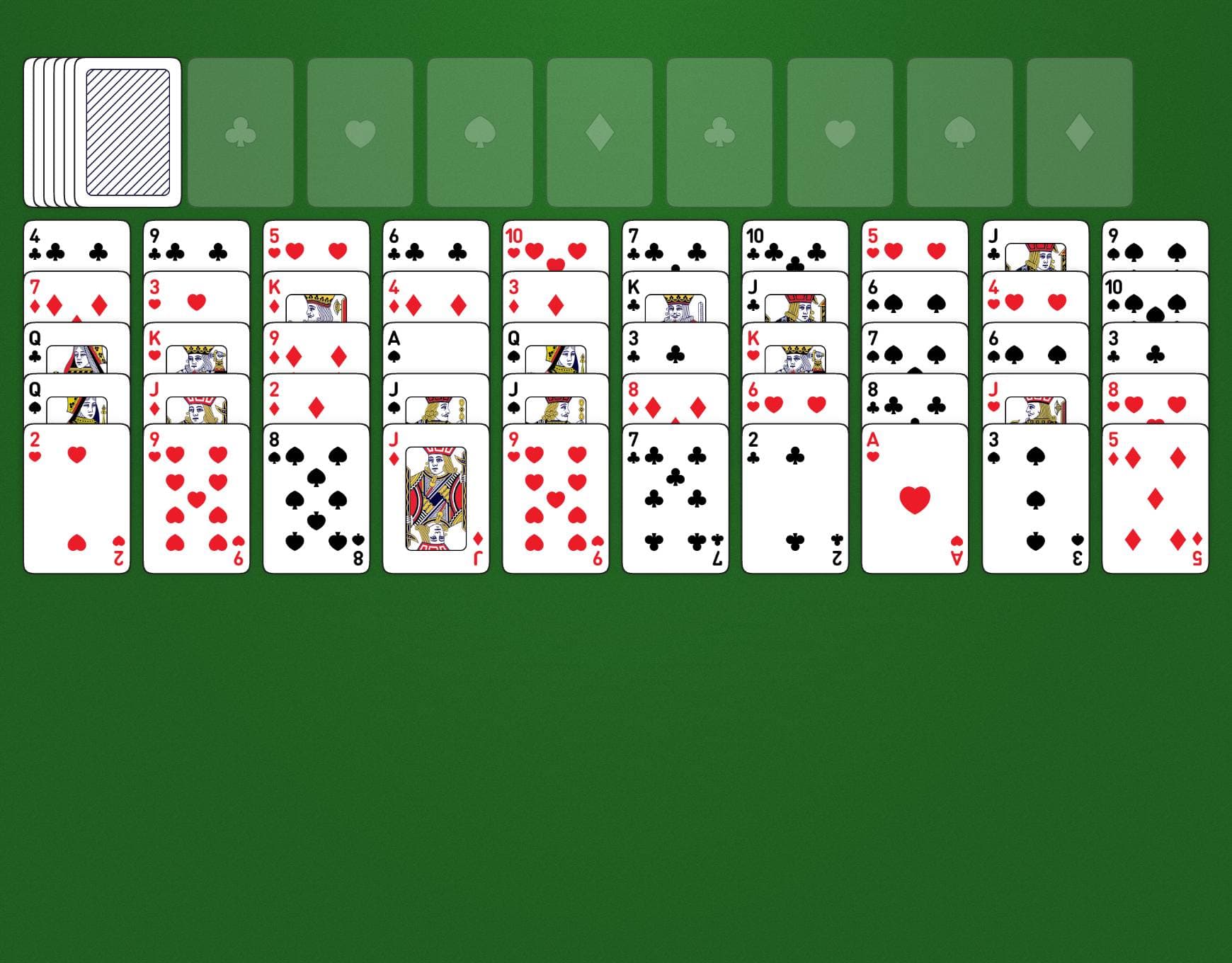
Cards are dealt face-up in this simple Spider version invented by Fred Lunde of Livonia, Michigan. Single cards move to the foundation as soon as they're in order, so you don't need to build a complete run in the tableau first. That's what makes it so forgiving: the game is simple, with a 96% chance of winning. Deal these two decks enough times and it's skill, not luck, that decides how you do.
Other solitaire games comparable to Fred's Spider Solitaire include Spider Solitaire, Spidike Solitaire, Cousin Fred, and Fred's Four.
If you run into anything odd or have an idea that would make the game better, please contact me.
Enjoy yourself!
How to play Fred's Spider Solitaire
Layout:
8 foundation piles: Build up from Ace to King in the same suit.
10 tableau piles: Build down in any suit. Move groupings of cards only if they're an in-sequence run of the same suit. Fill in the blanks with any card. At the start of the game, each pile is given 5 cards face-up.
Stock: Click the stock to deal one card to each tableau pile. There's only one pass through the stock; once it's empty, there are no more redeals.
Foundation:
There are eight foundation piles.
A card can be added to a foundation pile only if it's one rank higher and the same suit as the pile's current top card, so the only card that fits on a 5 of diamonds is a 6 of diamonds. There can be no more than 13 cards in a pile.
The top card of each foundation can be moved back into play if another pile will accept it.
Tableau:
Ten tableau piles of five cards each, all dealt face-up.
A card can be added to a tableau pile only if it's one rank lower than the pile's current top card and of any suit, so the card that fits on a seven is a six of any suit.
Cards on the tableau that are not covered by another card are free to be played onto the foundation or any other tableau pile.
Any card can fill an empty slot in the tableau.
Groups of cards in succession from high to low may be moved from one tableau column to another, but only if they're all the same suit.
Stock:
The stock holds the cards left over after the deal.
When you click the stock, one card is dealt to the top of each tableau pile. You get a single pass through the stock; once it runs out, that's it for the game.


